

Table of Contents
- Understanding UPF Ratings and How They Work
- Does UPF Protection Actually Wash Off?
- How to Wash UPF Protective Shirts Without Losing Protection
- Factors That Degrade Sun Protection Over Time
- How Long Does UPF Clothing Last?
- Signs Your UPF Clothing Is Worn Out
- Best Practices for Maintaining UPF Clothing
- Frequently Asked Questions
Last Updated: October 2, 2026
Understanding UPF Ratings and How They Work
Ultraviolet protection factor (UPF) measures how well fabric blocks UV radiation from the sun, though some types of UPF protection wash off while others remain permanent. A UPF50+ rating means the fabric blocks at least 98% of the sun's harmful rays. Think of it as sunscreen built into your clothing.
UPF works two ways: inherent protection (fiber structure blocks UV rays naturally in synthetics like polyester) and chemical finish (UV-absorbing treatments applied during manufacturing). Inherent protection stays permanent; chemical finishes degrade with laundering and sun exposure.
Does UPF Protection Actually Wash Off?
The short answer: it depends on the type of protection your shirt has.
Inherent UPF protection does not wash off. The fiber structure remains unchanged after 50, 100, or 500 washes. This is why synthetic materials hold their protection longer than cotton blends.
Applied chemical finishes gradually degrade with each wash cycle. Most quality UPF garments lose 5-10% of their protective efficacy per 10 washes.
Inherent vs. Applied UPF Protection
Inherent protection comes from tightly woven synthetic fibers (polyester, nylon, polypropylene) that naturally absorb and reflect UV radiation, maintaining their UPF rating indefinitely. Applied protection uses UV-absorbent chemicals bonded to fabric surfaces, effective initially but gradually diminishing with washing, chlorine exposure, and sun damage.
You can tell which type you own by checking the care label. If it says "permanent" or "inherent UPF," the protection lasts the life of the garment. If it says "durable" or just lists the UPF rating without specifying permanence, it's likely a chemical finish that will gradually weaken.
What Happens During the Wash Cycle
Hot water breaks down chemical finishes faster than cold water. Mechanical action (agitation, wringing, tumbling) accelerates degradation, as does chlorine and detergent residue. Machine drying causes heat damage; air drying preserves protection. The fabric weave remains intact, only the chemical treatment degrades.
How to Wash UPF Protective Shirts Without Losing Protection
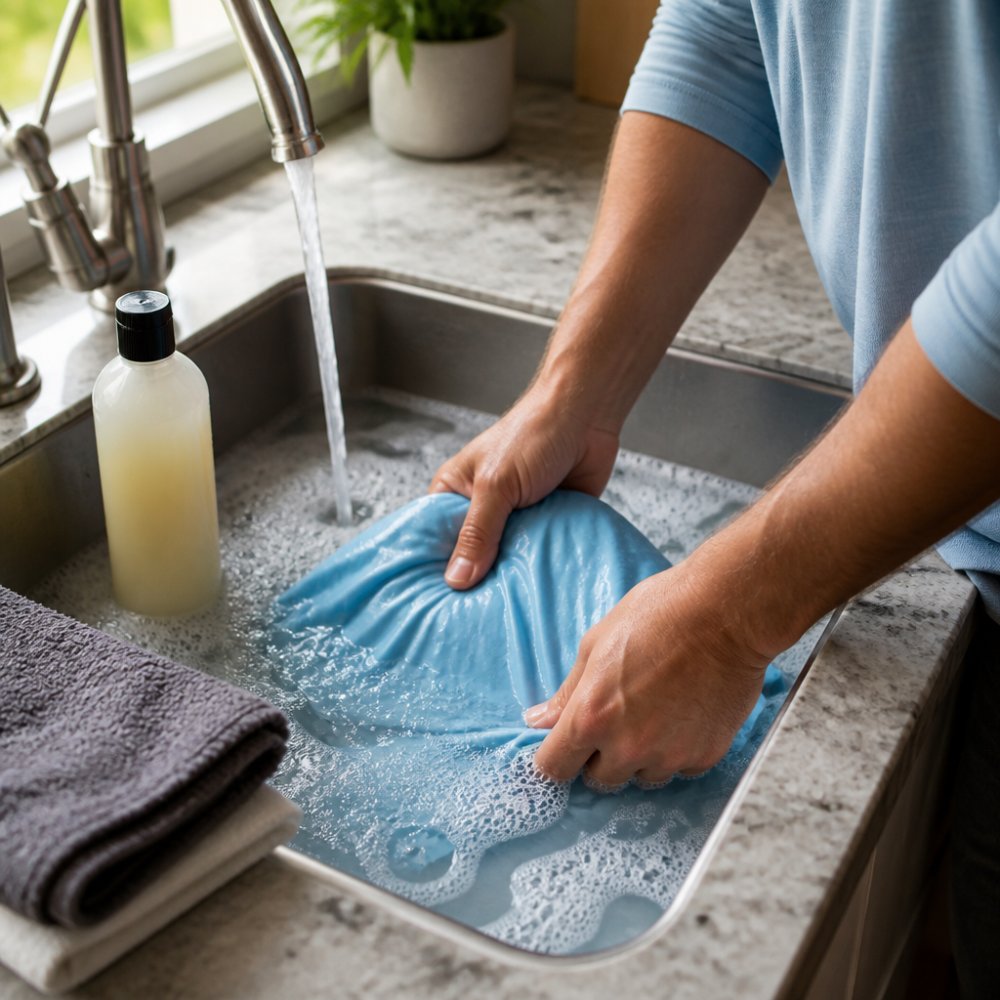
Proper care extends the life of your sun-protective clothing significantly. The goal is minimizing both chemical breakdown and mechanical stress on the fabric.
Step-by-Step Washing Instructions
Step 1: Use cold water Set your machine to cold or cool water (15-20°C). Cold water reduces chemical finish degradation by 40-50% compared to warm cycles.
Step 2: Choose mild detergent Use gentle, fragrance-free detergent. Avoid bleach, fabric softener, and optical brighteners, which attack UV-absorbent finishes.
Step 3: Wash on gentle cycle Select a delicate or hand-wash cycle to reduce mechanical action that strips protective coatings.
Step 4: Wash with similar colors Group UPF shirts together and separate heavily soiled items to prevent unnecessary wear.
Step 5: Rinse thoroughly Run an extra rinse cycle to remove all detergent residue. Leftover soap accelerates chemical breakdown between washes.
Step 6: Air dry completely Hang dry in shade or lay flat. Skip the dryer entirely. Heat damages UV-absorbent chemicals. Air drying also prevents fabric shrinkage and maintains the tight weave that provides inherent protection.
Detergent and Chemical Considerations
Standard detergents contain surfactants and enzymes that break down chemical finishes. Fabric softener coats fabric with waxy residue that interferes with UV absorption, skip it. Bleach destroys finishes rapidly. Hard water minerals can degrade finishes; use distilled water for the rinse cycle if needed.
Factors That Degrade Sun Protection Over Time
UPF protection degrades from multiple sources beyond just washing. Understanding the chemistry behind each degradation pathway helps you prioritize which exposures to avoid and which are manageable.
Chemical Degradation Mechanisms
UV exposure during wear and storage breaks down applied chemical finishes through photodegradation. A shirt worn daily in bright sun loses protection faster than one worn occasionally in shade. Store UPF clothing in cool, dark places, not on sunny shelves or in hot car trunks.
Chlorine exposure is particularly destructive, reducing applied protection by 20-30% per exposure. Saltwater is similarly problematic, salt crystals accelerate chemical breakdown. Rinse your shirt with fresh water immediately after chlorine or saltwater exposure.
Sweat and body oils create a barrier reducing UV-absorbent effectiveness. Rinse sweat-soaked shirts with fresh water quickly after use to prevent salt residue accumulation.
BlueTail Hooded UV Shirt UPF50+ →
Heat exposure accelerates chemical breakdown. Machine drying (50-65°C) noticeably speeds degradation of applied finishes. Air drying in shade avoids heat damage. Store in cool closets, not hot attics.
Environmental Factor Comparison Table
| Factor | Type of Damage | Speed of Degradation | Prevention Strategy |
|---|---|---|---|
| UV exposure (sun) | Photodegradation of applied finish | Moderate (weeks to months) | Store in dark, cool location; minimize sun exposure during storage |
| Chlorine (pools, spas) | Oxidative breakdown of chemical bonds | Severe (single exposure: 20-30% loss) | Rinse immediately with fresh water after exposure |
| Saltwater | Hygroscopic salt crystals + oxidation | Severe (single exposure: 15-25% loss) | Rinse thoroughly with fresh water immediately after use |
| Sweat and body oils | Barrier formation reducing UV absorption | Mild to moderate (gradual over multiple wears) | Rinse with fresh water after sweaty activity |
| Heat (machine drying) | Thermal degradation of chemical bonds | Moderate (5-10% per cycle with applied finishes) | Air dry only; avoid machine drying entirely |
| Hard water minerals | Mineral deposit interference | Mild (gradual accumulation) | Use distilled water for rinse cycle or add water softener |
| Humidity in storage | Mildew growth + moisture-accelerated degradation | Moderate (weeks to months in sealed containers) | Store in breathable containers in cool, dry spaces |
Inherent vs. Applied Protection Under Environmental Stress
These degradation factors affect inherent and applied protection differently. Inherent protection (fiber-level UV absorption) is largely immune to chemical degradation from chlorine, sweat, and body oils because the UV-absorbing mechanism is built into the polymer structure itself. However, inherent protection can still be compromised by:
- Physical damage to the weave: Pilling, fraying, or loosening of the tight weave that blocks UV rays. This can result from aggressive washing, excessive heat, or prolonged UV exposure that weakens fibers.
- Fiber degradation from extreme heat: Prolonged exposure to very high temperatures (above 70°C) can weaken synthetic fibers, though normal machine drying rarely reaches this threshold.
Applied protection is vulnerable to all the chemical and thermal factors listed above because the protective mechanism sits on the fiber surface and can be stripped away or degraded.
How Long Does UPF Clothing Last?
Quality UPF garments maintain effective protection for 40-50 washes with proper care. After that point, chemical finishes typically lose 20-30% of their original efficacy.
With excellent care, cold water washing, air drying, minimal sun exposure during storage, you can extend this to 60-75 washes before noticeable degradation occurs.
Inherent protection lasts the life of the garment. A synthetic UPF50+ shirt worn 100 times still blocks 98% of UV rays if the fabric itself remains intact.
Real-world lifespan depends on usage patterns. An angler fishing 5 days per week might replace a chemically treated shirt annually. Someone wearing UPF gear occasionally could get 2-3 years of effective protection.
Signs Your UPF Clothing Is Worn Out
Knowing when to retire your sun-protective gear matters. Worn-out UPF clothing provides false confidence, you think you're protected when you're not.
Visual and Physical Indicators
Fading is the most obvious sign. If your UPF shirt has faded dramatically, the fabric has absorbed significant UV damage. This same damage affects the protective finish.
Look for pilling on the fabric surface. Small balls of fiber indicate the fabric weave is breaking down. Loose weaves let more UV through.
Check seams and hems for fraying or separation. Damaged seams mean UV rays can penetrate at those points, bypassing your protection entirely.
Feel the fabric texture. If it feels stiff, brittle, or papery, the fibers have degraded. This reduces both comfort and UV-blocking ability.
Discoloration or staining that won't wash out suggests chemical breakdown.
Performance Changes You'll Notice
Your skin burns more easily in the same sun exposure. This is the clearest sign your UPF protection has failed. If you're getting sunburned in areas covered by your shirt, retire it.
Best Practices for Maintaining UPF Clothing
Treat your UPF gear like you'd treat expensive technical equipment. Small habits preserve protection and extend garment life.
Frequently Asked Questions
Does UPF protection wash off your fishing shirt after multiple washes?
UPF protection does degrade with washing, but the rate depends on how the shirt was made. Washing in cold water, using mild detergent, and air-drying significantly slows the degradation process compared to hot water and machine drying.
Can you apply sunscreen underneath your UPF fishing shirt?
Yes, applying sunscreen under your UPF shirt adds an extra layer of protection, especially on exposed areas like your neck, face, and hands. Sunscreen and UPF clothing work through different mechanisms, sunscreen absorbs or reflects UV rays on skin, while UPF fabric blocks UV transmission through the weave. For long days on the water, combining both methods is a smart approach to reducing sun exposure.
What type of laundry detergent should you use to preserve UPF clothing?
Use mild, fragrance-free detergents and avoid bleach, which breaks down UV-absorbent chemicals and synthetic fibers. Optical brighteners in some detergents can also interfere with UPF protection. Cold-water washing with minimal detergent preserves the fabric's integrity better than hot water. For fishing shirts, a gentle cycle or hand-washing with cool water and mild soap keeps the tight weave and fiber structure intact longer.
How can you tell if your UPF shirt has lost its sun protection?
Watch for visible signs like fading, pilling, thinning fabric, or loss of elasticity. Performance changes include reduced moisture-wicking, increased water absorption, or visible wear in high-stress areas. If the garment shows significant fabric degradation, color loss, or stretching, the tight weave that provides UV protection is compromised.