

Table of Contents
- How Water Affects UV Protection in Clothing
- Understanding UPF Ratings and Wet vs. Dry Clothing UPF
- UPF Clothing When Wet: Fabric Type Matters
- UV Protection of Cotton Shirts and Other Common Materials
- Factors That Affect Clothing UV Protection on the Water
- Practical Strategies for Sun Safety When Fishing and Boating
- Frequently Asked Questions
Last Updated: October 9, 2026
How Water Affects UV Protection in Clothing
When you step into the water after hours of fishing, your clothes feel heavier, and that matters.
Dry fabric has air pockets between fibers that scatter and absorb UV rays.
The effect isn't subtle: a shirt that blocks 98% of UV rays when dry can lose 20-30% of its protection when soaked. That's why understanding moisture and UV protection matters for anyone spending long hours on the water.
Understanding UPF Ratings and Wet vs. Dry Clothing UPF
UPF stands for Ultraviolet Protection Factor. It measures how much UV radiation a fabric blocks compared to unprotected skin. A UPF50+ shirt blocks 98% of ultraviolet radiation when dry. But that rating changes in water.

Why moisture reduces UPF effectiveness
Moisture disrupts the fiber structure that creates UV protection. Water molecules slip between fibers and reduce their ability to scatter incoming UV rays, making the fabric more permeable to solar UV.
This happens across all fabric types, though the degree varies.
Weave porosity matters too: tightly woven fabrics lose less protection when wet, since a dense weave restricts water penetration.
How much protection is lost when fabric gets wet
Most quality UPF50+ garments lose 20-30% of their UV-blocking ability when fully saturated, a wet UPF50+ shirt might perform closer to UPF35-40.
The loss isn't immediate: the first few minutes of exposure leave protection relatively high, but after 15-20 minutes of continuous contact, saturation reaches levels where the drop becomes significant.
A quick dip has minimal impact, but extended wading or swimming in the same shirt requires accounting for reduced UV effectiveness.
UPF Clothing When Wet: Fabric Type Matters
Not all fabrics respond the same way to moisture. The differences show up not just in how much protection is lost, but in how quickly a garment dries and regains its rated UPF, that drying curve determines your exposure over a full day.
Synthetic fibers versus natural fibers
Synthetic materials like polyester, nylon, and polypropylene resist water absorption thanks to a smooth, hydrophobic surface.
Natural fibers like cotton and linen absorb water readily. Cotton fibers swell when wet, changing their density and light-scattering properties. Linen behaves similarly.
Blended fabrics offer middle-ground performance: a 70% polyester, 30% cotton blend beats 100% cotton when wet but doesn't match pure synthetics.
For water-based activities, synthetic-dominant fabrics provide superior UV protection when wet. This is why quality fishing shirts prioritize polyester and nylon blends.

Fabric-specific drying times and protection recovery
How fast a garment dries determines how long you stay in the reduced-protection window. Typical drying ranges for a lightweight shirt in direct sun with a light breeze, heavier weights and humid, still conditions push these longer:
- Polyester (lightweight, ~130-150 gsm): roughly 20-40 minutes to dry; regains most of its rated UPF within that window.
- Nylon: similar to polyester, often 25-45 minutes, though nylon can feel cooler and hold a slightly longer damp period against skin.
- Polyester/cotton blend (60/40 or 70/30): roughly 45-75 minutes; protection recovers more slowly because the cotton portion holds water.
- 100% cotton: roughly 60-120 minutes or more; a saturated cotton shirt can stay damp and in the reduced-protection zone for well over an hour.
- Wool: slow to dry and heavy when wet; impractical for active water sports despite reasonable natural water resistance.
On a day of repeated water exposure, a cotton shirt may never fully dry and never returns to its dry UPF, while a lightweight synthetic shirt can cycle back to near-full protection between wading sessions.
Visual indicators that a garment is too wet to trust
A few observable cues tell you when to treat fabric as compromised:
- Dark, continuous wet patches that don't lighten in the sun. Localized saturation is where UV passes through most easily.
- Fabric clinging and turning translucent when held to the light. If you can see brightness through the weave, UV is getting through too.
- A cold, heavy feel against the skin with no drying progress after several minutes in sun and wind. This signals the garment is holding water rather than shedding it.
- Visible stretching at shoulders, back, and knees. Wet fabric under tension thins, and thinner fabric blocks less UV.
When you see these signs, treat the garment as if it has lost a meaningful share of its protection, add a dry layer, move to shade, or increase sunscreen coverage on exposed skin.
Fabric weave and density impact
Tight weaves create more UV protection than loose weaves, leaving less space between fibers for UV rays to penetrate, and when wet, they also restrict water penetration more effectively.
Saturation happens faster in lightweight, loosely woven materials: a thin shirt waterlogs within minutes, while a heavier, tightly woven shirt resists saturation longer and dries faster.
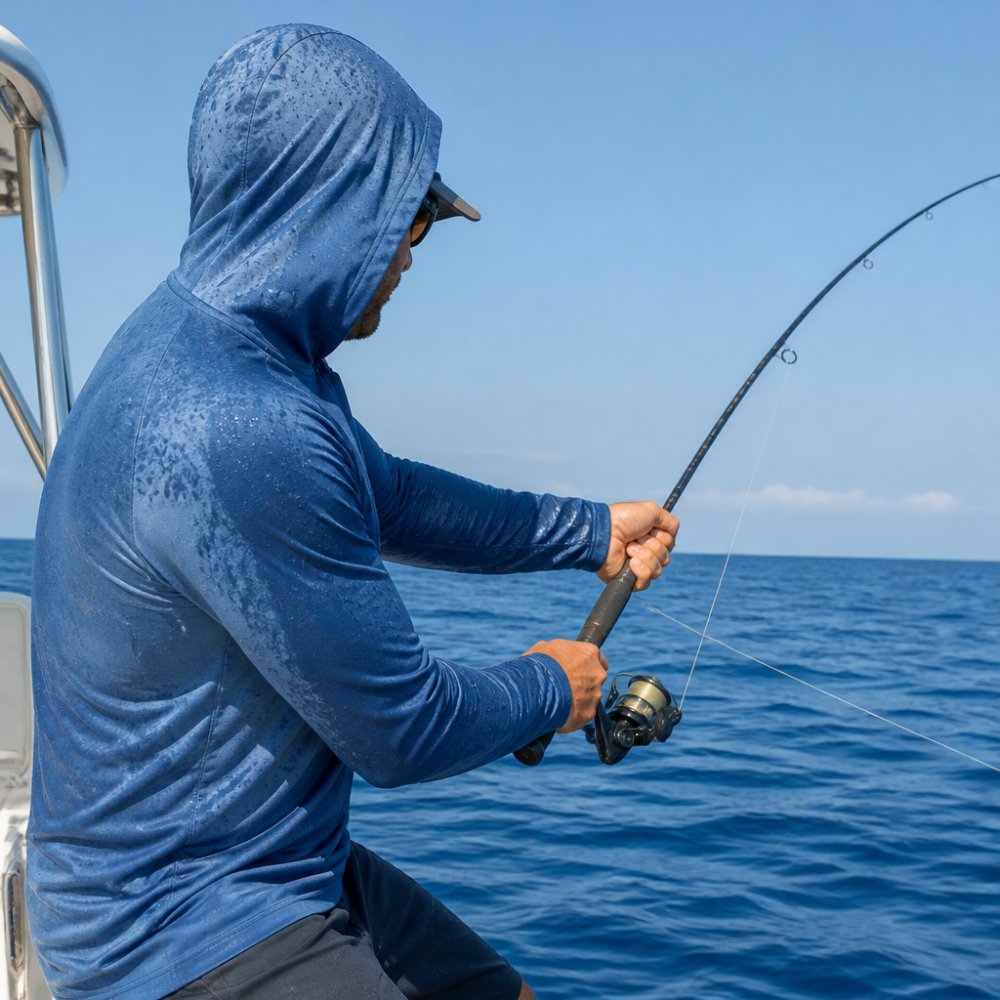
UV Protection of Cotton Shirts and Other Common Materials
Cotton remains popular for fishing and outdoor wear because it's breathable and comfortable. However, cotton performs poorly when wet from a UV protection standpoint.
Dry cotton with a UPF rating of 30-50 loses 30-40% of that protection when saturated.
Polyester maintains protection better. A UPF50+ polyester shirt loses only 15-25% of protection when wet.
Nylon performs similarly to polyester. Both have tight molecular structures that repel water, which is why synthetic-dominant apparel is standard in professional fishing and water sports.
BlueTail Hooded UV Shirt UPF50+ →
The practical takeaway: between a cotton fishing shirt and a synthetic UV shirt, the synthetic option provides measurably better protection during water exposure.
Factors That Affect Clothing UV Protection on the Water
Several environmental and material factors determine how well your clothing protects you during water activities.
Chlorine, salt water, and fabric degradation
Salt water and chlorine both affect fabric durability over time. Salt water is corrosive, breaking down synthetic fibers and fading dye, while chlorine chemically degrades fibers, particularly natural ones.
More importantly for UV protection, repeated exposure can compromise the fiber structure itself: a shirt that blocks 98% of UV rays when new might drop to 90% after 20 salt water sessions.
Rinsing your shirt in fresh water immediately after salt water or chlorine exposure slows this degradation and extends the life of UV protection in your apparel.
Drying time and UV saturation
How quickly your shirt dries affects how long you maintain reduced protection. A lightweight synthetic shirt dries in 30-45 minutes in sun and wind.
As water evaporates, your shirt gradually regains UV protection, returning to its rated level once dry.
On all-day fishing trips with repeated water exposure, your shirt never fully dries, so protection stays in that 20-30% reduction zone throughout the day. Planning for this is essential for sun safety.
Practical Strategies for Sun Safety When Fishing and Boating
Applying the science through a full day of repeated water exposure is where most guides stop short. The strategies below focus on layering systems and garment care that hold up when you're saturated, not just dry.
Layering strategies that survive saturation
The goal of layering for water sports isn't more fabric, it's a system where at least one layer keeps working even when the outer layer is soaked.
- Base layer (against skin): a thin, moisture-wicking synthetic, polyester or a poly/spandex blend. This layer moves water away from your skin and dries fast, so it stays close to full protection even when damp.
- Mid or primary UV layer: a UPF50+ synthetic shirt with a tight weave. This is your main defense. When it saturates, the base layer underneath still blocks a meaningful share of UV.
- Outer layer (optional, for long sessions): a lightweight, quick-dry shell or a second UPF shirt you can swap into when the primary layer is soaked. Carrying a dry spare is the single most effective move on a full-day trip.
Experienced anglers and paddlers often use a "two-shirt rotation": wear one, keep one dry in a dry bag, and swap when the first shows dark, clinging saturation signs.
For lower-body protection, quick-dry synthetic pants or leggings outperform cotton shorts, which stay damp and lose protection.
Choosing the right UV-protective apparel
Look for shirts with UPF50+ ratings, the highest standard available. UPF50+ blocks 98% of UV radiation when dry and maintains meaningful protection when wet.
Choose synthetic-dominant fabrics, polyester and nylon blends outperform cotton in water. Check the label.
Select heavier-weight construction when possible. A 200-gram shirt maintains better wet protection than a 150-gram shirt of the same material.
Consider fit: your UV shirt should allow free movement for casting and handling equipment, since a restrictive shirt gets uncomfortable during long sessions.
Look for shirts that include:
- UPF50+ rating
- Polyester or nylon construction
- Tight weave for water resistance
- Hood for facial protection
- Moisture-wicking properties
- Quick-dry capability
Care that preserves UV protection over time
Chemical exposure quietly erodes the protection you paid for. Over many sessions, a shirt that started at UPF50+ can drift downward as salt water and chlorine break down fibers.
A few habits slow this degradation:
- Rinse in fresh water immediately after salt or chlorine exposure. This is the highest-impact step and takes seconds.
- Wash gently with mild detergent and avoid fabric softeners, which can coat fibers and reduce their UV-blocking performance.
- Air-dry rather than tumble-dry on high heat, which stresses synthetic fibers over time.
- Retire garments that have thinned, pilled, or faded significantly. Visible wear usually signals reduced UV blocking.
Pairing apparel with sunscreen and shade
Apparel is your primary barrier, but it works best as part of a layered defense. Reapply broad-spectrum sunscreen to exposed skin, face, ears, neck, hands, and any gap between sleeve and glove, more frequently when you're in and out of the water, since water contact and toweling remove product. Seek shade during peak UV hours, and use a buff or hood to cover the neck and ears hats often miss.
Frequently Asked Questions
Does wet clothing provide less UV protection than dry clothing?
Yes. Wet fabric transmits more ultraviolet radiation than dry fabric because water molecules fill the spaces between fibers, reducing the material's ability to block UV rays. The loss varies by fabric type, but most textiles lose 20-50% of their UV-blocking effectiveness when saturated with water. This is why staying dry or choosing materials designed to maintain protection when wet is critical for anglers spending long hours on the water.
How much does moisture reduce UPF clothing when wet?
The reduction depends on fabric construction and fiber type. Tightly woven synthetic materials like polyester retain 60-80% of their UPF rating when wet, while loosely woven natural fibers such as cotton may retain only 30-50%. A UPF50+ shirt might provide UPF30-35 protection when saturated. This is why garment construction matters as much as the initial rating when you're selecting apparel for water activities.
What factors affect clothing UV protection when you're on the water?
Fabric weave density, fiber type, moisture content, color, and garment construction all influence UV protection. Salt water and chlorine can accelerate fabric degradation, reducing UV-blocking capability over time. Drying time also matters: partially wet fabric offers inconsistent protection, while fully dry fabric restores most UV-blocking ability. For water-based activities, high-fiber-density synthetic materials with tight weaves maintain the best protection when exposed to moisture and UV radiation simultaneously.
Which fabrics provide the best UV protection when wet?
Synthetic fibers like polyester and nylon maintain stronger UV protection when wet compared to cotton or linen. High-fiber-density fabrics with tight weaves block more ultraviolet radiation regardless of moisture content. Specialized UV-protective clothing engineered with specific fiber blends and weave patterns outperforms standard cotton significantly. For fishing and boating, look for apparel labeled UPF50+ that uses synthetic or synthetic-blend materials, as these retain effective photoprotection even during extended water exposure.