

Table of Contents
- What Catch and Release Actually Means for Fish Populations
- Catch and Release Mortality Rates: What the Science Shows
- Fish Handling Best Practices to Improve Survival
- The Impact of Barbless Hooks on Fish Injury and Recovery
- Physiological Stress, Thermal Shock, and Post-Release Recovery
- The Ethical Debate: Is Catch and Release Sustainable Long-Term?
- Making Catch and Release Work for Conservation
- Frequently Asked Questions
Last Updated: September 30, 2026
What Catch and Release Actually Means for Fish Populations
Catch and release is the practice of capturing fish and returning them to the water alive. It's the dominant management strategy for recreational fisheries across much of the developed world, built on the assumption that returning fish unharmed preserves populations. But the reality is more complicated.
Survival depends on a cascade of biological factors: species, size, water temperature, handling method, and time of year all influence whether a released fish lives or dies in the weeks following capture.
Understanding whether catch and release is actually sustainable requires looking at what the science shows, not what the marketing suggests.
Catch and Release Mortality Rates: What the Science Shows
Post-release mortality varies dramatically by species and circumstances. Some fish bounce back within hours; others carry injuries or stress that kills them days or weeks later.
Largemouth and smallmouth bass show survival rates of 80-95% when handled with care and released quickly, making them among the most resilient to catch-and-release pressure.
Rainbow and brown trout show survival rates of 70-90% in cool water, but drop below 60% when water temperature exceeds 20°C, particularly for brook trout.
Walleye show survival rates of 75-85%, but are highly sensitive to air exposure; even brief exposure over 30 seconds reduces survival significantly.
Pike and musky show survival rates of 70-85%, but exhaustion from prolonged fights increases mortality, especially in warm water.
These figures assume proper handling: wet hands, air exposure under 30 seconds, and quick release. Deviations can reduce survival by 10-20 percentage points.
A fish that swims away may appear fine but die from infection, organ damage, or predation within days. Handling stress weakens the fish's immune response and ability to escape predators. Studies show stressed fish exhibit reduced feeding for 24-72 hours after capture, increasing predation vulnerability.
The ethical debate hinges on whether the fish's welfare matters in itself or only whether the population persists. What is measurable is that the fish experiences physiological stress during and after capture, regardless of survival.
Fish Handling Best Practices to Improve Survival
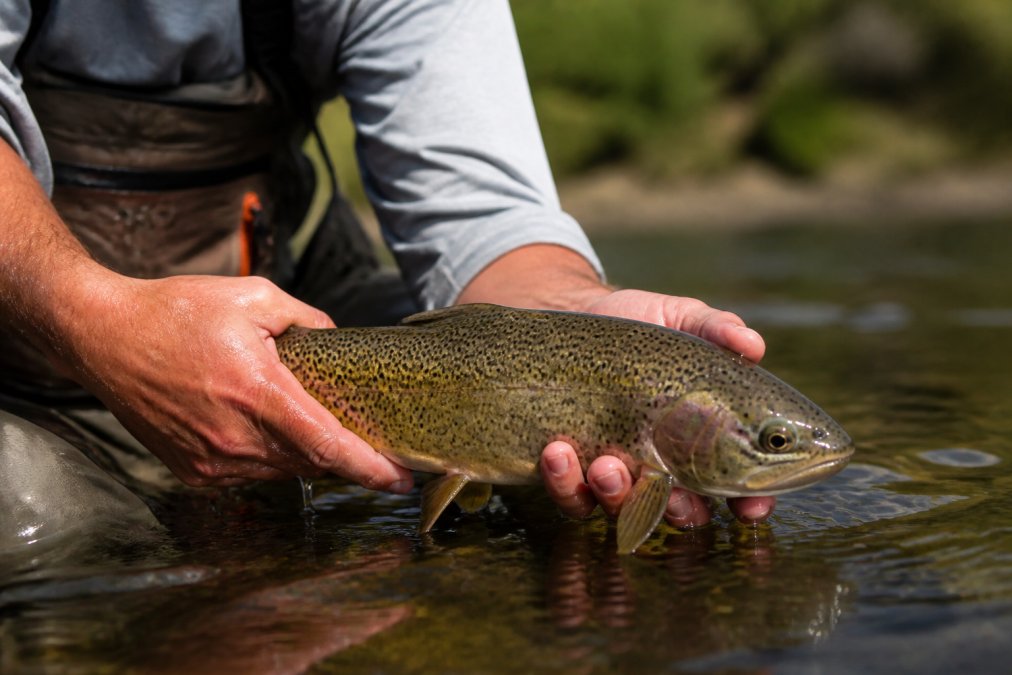
Keep air exposure under 30 seconds; fish can't breathe air and oxygen absorption stops immediately. Wet your hands before touching the fish; the slime coating protects against infection and regulates temperature. Dry hands strip this away.
Support the fish horizontally, cradling the body. Avoid touching gills or eyes. Use a hook removal tool rather than forcing it out by hand. For deeply hooked fish, cut the line rather than cause additional trauma.
Return the fish gently. If exhausted, hold it upright and move it forward slowly to push water through its gills. This "reviving" can mean the difference between strong recovery and predation or death.
Releasing a fish into significantly warmer or colder water triggers thermal shock. Fish pulled from deep, cool water and released into warm shallows face immediate stress.
The Impact of Barbless Hooks on Fish Injury and Recovery
Barbless hooks reduce injury severity compared to barbed hooks, but don't eliminate it. The hook still creates a wound and introduces infection risk.
Barbless hooks are easier to remove quickly, reducing handling time and air exposure. A fish hooked in the lip with a barbless hook and released within 20 seconds recovers better than one held for two minutes with a barbed hook.
Barbless hooks aren't a magic solution. Fish experience pain through nociceptors in their tissue. The question is whether using them is enough to make catch and release truly sustainable.
Barbless hooks are a practical step that improves outcomes, but work best with minimal handling time, wet hands, and quick release.
Physiological Stress, Thermal Shock, and Post-Release Recovery
The fight triggers physiological responses: heart rate spikes, cortisol and adrenaline flood the system, lactate accumulates in muscles. This metabolic exhaustion is real and measurable.
Water temperature amplifies this stress. A fish fighting hard in warm water exhausts faster than one in cool water because its metabolism is running higher. Warm-water species like smallmouth bass are more tolerant of this stress than cold-water species like brook trout. Trout in water above 20°C experience rapid physiological decline and higher post-release mortality.
Post-Release Recovery Behavior and the Predation Window
What happens in the first minutes and hours after release is critical and often overlooked by anglers. A fish that swims away does not immediately return to normal behavior. Research on post-release behavior shows a predictable recovery timeline:
Minutes 0-5: The fish exhibits disorientation and erratic swimming. Its equilibrium is compromised. It may swim in circles or drift with the current. During this window, the fish is highly vulnerable to predation because it cannot respond quickly to threats. Predatory fish, birds, and larger fish species actively hunt for these vulnerable individuals.
Minutes 5-30: The fish begins to stabilize but remains lethargic. Its swimming becomes more directed, but it does not resume normal feeding or defensive behavior. Cortisol levels remain elevated. The fish's ability to detect and escape predators is compromised.
Hours 1-24: Gradual recovery of normal swimming and feeding behavior occurs, but metabolic stress persists. Studies tracking individual fish via acoustic telemetry show that recently released fish move less, occupy shallower or more exposed habitat, and exhibit reduced foraging efficiency compared to unhandled fish. This behavioral shift increases predation risk even as the fish appears to be recovering.
Days 2-7: Most fish return to baseline behavior, though immune function remains suppressed for several days. Fish that were exhausted during capture or handled roughly show delayed recovery and higher infection rates from minor wounds.
This post-release vulnerability window is a major driver of sub-lethal mortality that anglers cannot see. A fish released into a pool with active predators, larger bass, pike, cormorants, or herons, faces significantly higher mortality risk during the first 30 minutes than a fish released into a quiet, predator-free area.
Thermal Stress and Acclimation
Thermal stress occurs when a fish is moved between water of different temperatures. A trout pulled from a deep, cold pool and released into a warm, shallow area faces immediate shock to its system. Its gills can't function as efficiently. Its oxygen demand increases. The fish becomes more vulnerable to predation and disease.
The severity depends on the temperature differential. A shift of 5°C is manageable for most species if the fish is given time to acclimate. A shift of 10°C or more can be lethal, particularly for cold-water species. In summer, deep-water trout pulled to the surface and released into warm shallows may not survive the thermal shock, even if they appear to swim away normally.
Minimizing Post-Release Mortality Through Recovery Management
If a fish appears exhausted after release, gasping, unable to maintain position, drifting, hold it upright in the water and move it forward slowly to push water through its gills. This "reviving" process can take 30 seconds to 2 minutes. The goal is to restore oxygen flow and allow the fish to regain equilibrium before you release your grip. A fish that swims away strongly after this recovery period has a significantly higher survival rate than one released while still exhausted.
Choose release location strategically. Release the fish in deeper water with cover (vegetation, rocks, logs) where it can hide during the vulnerability window. Avoid releasing into shallow, open areas where predators hunt. If you're fishing a stream, release the fish upstream of where you caught it so it drifts into familiar territory as it recovers.
Consider water temperature when planning your fishing. Early morning and evening sessions in summer mean cooler water and less thermal stress. Avoid fishing for trout in the afternoon during hot months when water temperatures peak. If you must fish warm water, keep sessions short and release fish immediately.
The Ethical Debate: Is Catch and Release Sustainable Long-Term?
This is where science meets philosophy. The data on catch and release is mixed, and reasonable people interpret it differently.
One view holds that catch and release is fundamentally sustainable because it allows fish to reproduce and populations to persist. Even if some fish die after release, the population-level impact may be acceptable. This assumes that the number of fish removed through catch and release (and mortality) stays within the population's reproductive capacity.
The opposing view argues that catch and release causes unnecessary suffering and sub-lethal harm that weakens populations over time. Even if fish don't die immediately, the stress of capture, the injury, the predation vulnerability, and the metabolic exhaustion all take a toll. Add that to angling pressure, the cumulative effect of thousands of anglers repeatedly catching the same fish, and populations can decline even if individual fish survive release.
The truth likely depends on context.
Making Catch and Release Work for Conservation
If you practice catch and release, the goal should be to do it as responsibly as possible. This means understanding the biology of the fish you're targeting and adjusting your approach accordingly.
Frequently Asked Questions
Do fish actually survive catch and release fishing?
Survival depends heavily on species, handling method, and water conditions. Studies show survival rates typically range from 75% to 98% for most freshwater species when handled correctly. However, some fish experience sub-lethal effects like exhaustion, injury, and stress that reduce long-term fitness even if they survive initial release. Proper technique, minimizing air exposure, using barbless hooks, and keeping handling time short, significantly improves survival odds.
What are the best practices for minimizing fish handling stress?
Keep your hands wet to protect the fish's protective slime coating. Minimize air exposure, ideally under 30 seconds. Use barbless hooks to reduce injury severity. Handle fish gently and avoid squeezing the body or gills. Revive exhausted fish by moving them forward and backward in cool water to restore oxygen flow. These practices directly reduce metabolic exhaustion and improve post-release recovery behavior.
How do barbless hooks affect fish survival rates?
Barbless hooks cause significantly less tissue damage than barbed hooks, reducing hooking injuries that can lead to infection or bleeding. Studies show barbless hooks decrease visible injury by 40-60% compared to barbed alternatives. While fish may escape more easily on barbless hooks, those that are successfully landed experience faster healing and better long-term survival rates. The trade-off is worth it for sustainable angling.
Is catch and release sustainable if practiced by many anglers?
Sustainability depends on angling pressure, species resilience, and fisheries management regulations. Light to moderate angling pressure with proper catch-and-release techniques can coexist with healthy populations. However, high angling pressure on vulnerable species or breeding populations can reduce population sustainability despite low immediate mortality. Sustainable catch and release requires following seasonal closures, respecting breeding areas, and supporting fisheries management efforts that protect vulnerable stocks.